Electrical safety is one of the most critical aspects of any residential, commercial, or industrial electrical installation. While advanced electrical equipment and protective devices help maintain system performance, none of them can function effectively without a reliable earthing system. Earthing serves as the first line of defense against electrical faults, protecting people, equipment, and infrastructure from potentially dangerous electrical hazards.
At the heart of every effective earthing system are high-quality earthing materials. These components work together to safely dissipate fault currents into the ground, preventing electric shocks, reducing the risk of fire, and ensuring the proper functioning of protective devices.
Whether it’s a manufacturing plant, power station, commercial building, hospital, or renewable energy project, selecting the right earthing materials is essential for long-term electrical safety and operational reliability.
In this blog, we’ll explore the importance of earthing materials, their types, applications, benefits, and the factors to consider when designing an efficient grounding system.
What Are Earthing Materials?
Earthing materials are specialized components used to establish a low-resistance electrical connection between electrical equipment and the earth. Their primary purpose is to provide a safe path for fault currents, lightning strikes, and electrical surges to flow into the ground, thereby protecting both people and electrical installations.
An effective earthing system consists of multiple interconnected components, including electrodes, conductors, connectors, inspection chambers, and conductive compounds. Together, these materials create a stable and durable grounding network capable of handling electrical faults safely.
The quality of earthing materials directly affects the performance and longevity of the grounding system, making proper material selection a critical part of electrical infrastructure planning.
Why Is Earthing Important?
Electrical faults can occur unexpectedly due to insulation failure, equipment malfunction, lightning strikes, moisture ingress, or short circuits. Without a proper earthing system, these fault currents may energize metallic surfaces, creating serious risks such as electric shock, fire, equipment damage, and costly operational downtime.
A well-designed earthing system offers several important advantages:
- Protects human life from electric shock
- Prevents electrical fires caused by fault currents
- Protects expensive electrical equipment
- Ensures reliable operation of protective devices
- Reduces damage caused by lightning strikes
- Stabilizes voltage during abnormal operating conditions
- Minimizes equipment downtime
For these reasons, earthing is considered one of the most important safety requirements in every electrical installation.
Essential Earthing Materials
An effective earthing system relies on several specialized components working together. Each material performs a specific function in ensuring efficient fault current dissipation.
GI Earthing Electrodes
Galvanized Iron (GI) electrodes are among the most widely used grounding electrodes in industrial and commercial installations. They are manufactured from high-quality galvanized steel to provide excellent mechanical strength and corrosion resistance.
GI electrodes are suitable for locations with moderate soil resistivity and offer a cost-effective solution for long-term grounding applications.
Their advantages include:
- High durability
- Strong corrosion resistance
- Long service life
- Easy installation
- Cost-effective performance
Copper Bonded Earthing Electrodes
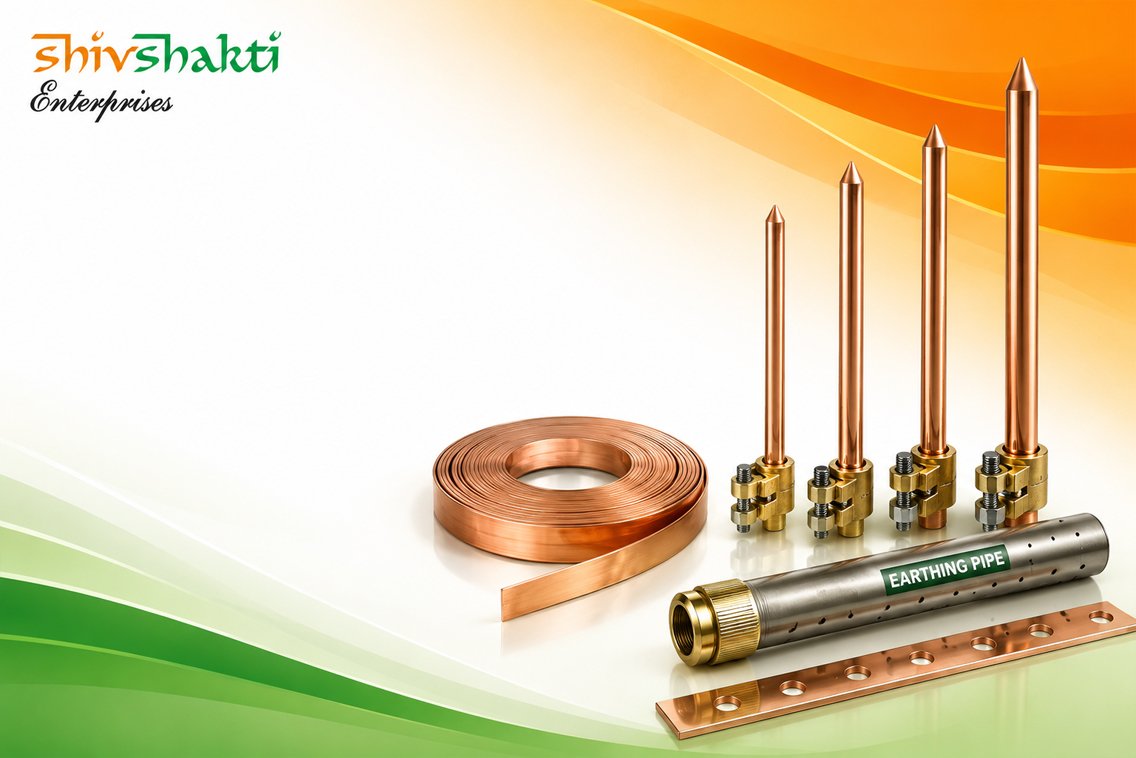
Copper bonded electrodes combine the strength of a steel core with the superior conductivity of copper. A thick layer of copper is molecularly bonded to the steel rod, creating a highly durable grounding solution.
These electrodes provide exceptional corrosion resistance and maintain low earth resistance for many years, even in aggressive soil conditions.
Copper bonded electrodes are commonly used in:
- Power plants
- Telecommunications
- Data centers
- Renewable energy systems
- Industrial facilities
GI Flats
GI flats serve as grounding conductors that connect earthing electrodes to electrical panels, equipment, transformers, and structural components.
They offer excellent mechanical strength and are widely used in industrial earthing networks because they can safely carry large fault currents.
GI flats are valued for their:
- High tensile strength
- Easy fabrication
- Long operational life
- Corrosion-resistant galvanized coating
Copper Conductors
- Copper conductors are preferred where maximum electrical conductivity is required. Their low electrical resistance allows fault currents to flow rapidly into the ground, improving overall earthing system performance.
- Copper conductors are frequently installed in sensitive electrical installations where reliable grounding is essential.
Earthing Connectors and Clamps
- Reliable mechanical connections are just as important as quality conductors. Earthing connectors, clamps, and couplers securely join grounding components while maintaining electrical continuity throughout the system.
- Poor-quality connections can increase earth resistance and compromise system safety.
Earthing Inspection Chambers
- Inspection chambers provide easy access to earthing electrodes for periodic testing, maintenance, and inspection.
- Regular monitoring of earth resistance helps ensure the grounding system continues to operate effectively throughout its service life.
Backfill Compounds (Ground Enhancement Materials)
In areas where soil resistivity is naturally high, conductive backfill compounds are used around earthing electrodes to improve electrical contact with the surrounding soil.
These materials help maintain consistently low earth resistance while reducing the effects of seasonal moisture variations.
Ground enhancement compounds are especially useful in:
- Rocky soil
- Sandy terrain
- Dry environments
- High-resistivity locations
Applications of Earthing Materials
Earthing materials are essential across almost every industry where electrical systems are installed.
Common applications include:
- Residential buildings
- Commercial complexes
- Hospitals
- Educational institutions
- Manufacturing industries
- Power generation plants
- Oil and gas facilities
- Renewable energy projects
- Railway infrastructure
- Airports
- Telecommunication towers
- Data centers
- Warehouses
- Water treatment plants
- Mining operations
Each application requires carefully selected earthing materials based on electrical load, environmental conditions, and applicable safety standards.
Benefits of High-Quality Earthing Materials
Investing in premium earthing materials offers long-term operational and financial advantages.
Improved Electrical Safety
Proper grounding significantly reduces the risk of electric shock by safely directing fault currents into the earth.
Enhanced Equipment Protection
Sensitive electrical equipment such as transformers, motors, generators, servers, and control panels are protected from damage caused by fault currents and voltage surges.
Reliable Fault Current Dissipation
Quality earthing materials maintain low resistance throughout their operational life, allowing protective devices to detect and isolate faults quickly.
Superior Corrosion Resistance
Materials such as copper bonded rods and galvanized steel components resist corrosion even in challenging environmental conditions, extending system life.
Reduced Maintenance Costs
Durable earthing components require less frequent replacement, lowering maintenance expenses over the lifetime of the installation.
Compliance with Safety Standards
Using certified earthing materials helps installations comply with national and international electrical safety regulations, reducing project risks and improving inspection outcomes.
Choosing the Right Earthing Materials
Selecting suitable earthing materials requires careful evaluation of several important factors.
Soil Resistivity
Different soil types offer varying electrical resistance. High-resistivity soils often require copper bonded electrodes and conductive backfill compounds to achieve acceptable grounding performance.
Environmental Conditions
Coastal, chemical, and industrial environments require corrosion-resistant materials capable of withstanding harsh operating conditions.
Fault Current Capacity
The grounding system must safely carry the maximum anticipated fault current without mechanical or thermal failure.
Installation Life
Projects designed for long service life should prioritize durable materials with proven corrosion resistance and minimal maintenance requirements.
Budget and Project Requirements
While initial costs are important, long-term reliability, maintenance savings, and equipment protection should also influence material selection.
Best Practices for Earthing Installation
Even the highest-quality earthing materials cannot perform effectively if installed incorrectly. Following recommended installation practices ensures optimal performance and long-term reliability.
Some important guidelines include:
- Conduct a soil resistivity survey before installation.
- Install electrodes at adequate depth for stable soil moisture conditions.
- Use corrosion-resistant connectors and clamps.
- Ensure all mechanical joints are securely tightened.
- Minimize unnecessary bends in grounding conductors.
- Protect exposed conductors from mechanical damage.
- Measure earth resistance after installation.
- Perform periodic inspections and maintenance to verify system performance.
Routine testing helps identify increased resistance caused by corrosion, loose connections, or changing soil conditions before they become serious safety concerns.
Why Quality Earthing Materials Matter?
Investing in high-quality electrodes, conductors, connectors, and enhancement materials ensures greater safety, improved equipment protection, lower maintenance costs, and reliable long-term performance. Quality materials also reduce the likelihood of unexpected failures that can result in costly downtime or hazardous situations.
Conclusion
Earthing materials form the backbone of every safe and reliable electrical installation. From GI flats and copper bonded electrodes to earthing compounds, connectors, and inspection chambers, each component plays a vital role in protecting people, equipment, and electrical infrastructure from the dangsers of fault currents and voltage surges.
Choosing the right earthing materials requires careful consideration of soil conditions, environmental factors, fault current levels, and long-term maintenance requirements. When high-quality materials are combined with proper installation and regular testing, they provide a grounding system that delivers exceptional performance for decades.